

Holland Beckett wishes you a Meri Kirihimete, Happy New Year and a safe and sunny summer holiday.
Our offices will be closed from 5:00pm on Tuesday 23 December 2025 and will reopen at 8:30am on Tuesday 6 January 2026.
You may also like ...
Holland Beckett celebrates new Senior Associates
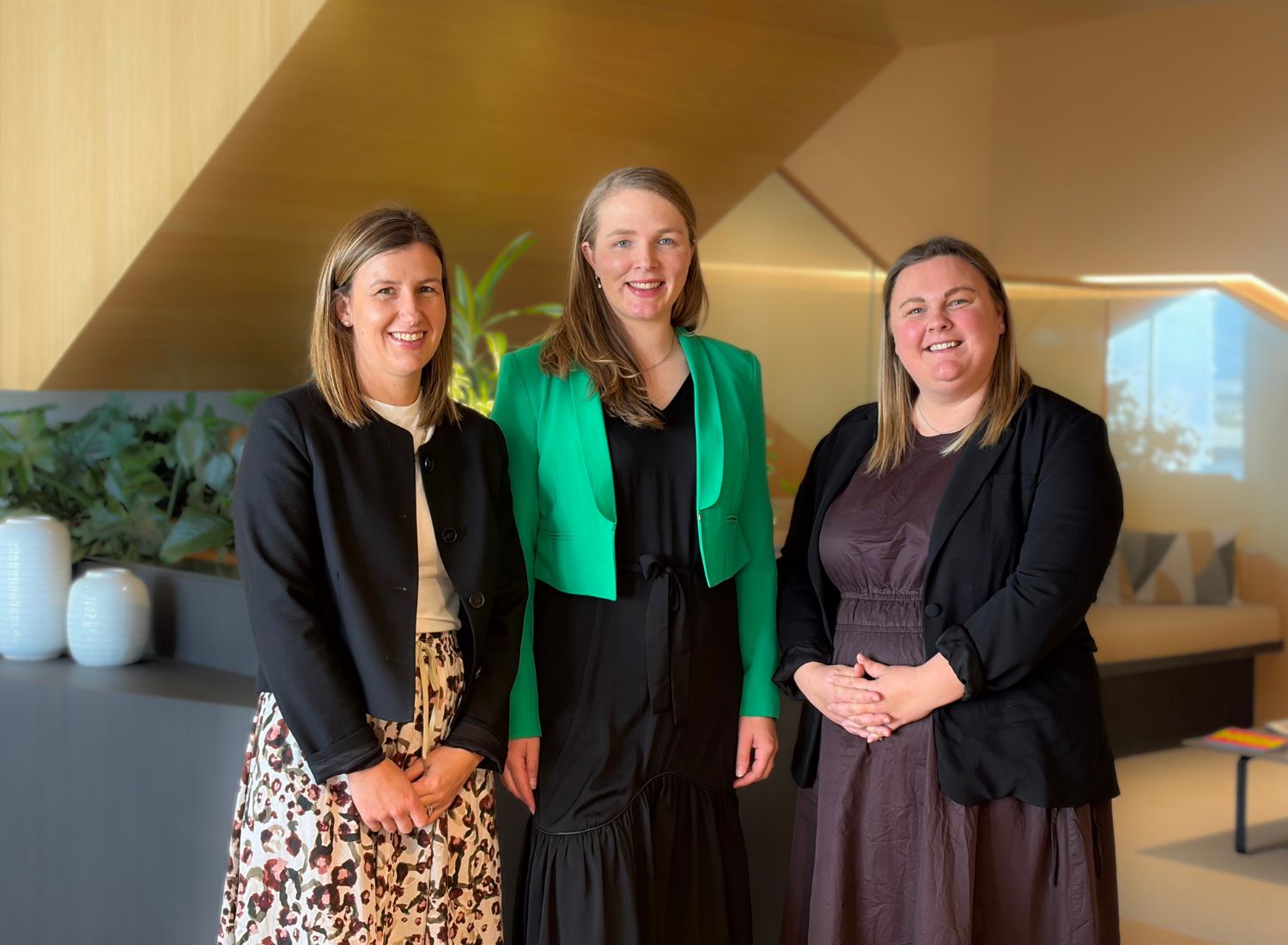
Holland Beckett is pleased to announce the promotion of Laura Murphy, Katherine Dyer and Katie Brown to Senior Associate.
Senior Associates L-R: Katie Brown, Katherine Dyer, Laura Murphy
“The number and breadth of this year’s promotions reflect the depth of talent across Holland Beckett and the strength of the service we provide to our clients,” says Sam Tabak, Partner. “Each of these lawyers has demonstrated expertise, leadership and dedication, along with a clear ability to add value for clients, colleagues and communities. We are proud to recognise their achievements and look forward to seeing them develop as leaders within Holland Beckett and the wider profession.”
Laura Murphy
Senior Associate – Environment and Planning
Laura has been an integral member of Holland Beckett\'s Environment and Planning team since 2020.
Laura advises clients on complex resource management matters, including consenting processes, planning matters, designations, enforcement proceedings, and major infrastructure and development projects.
Raised in Tauranga and proud to practise in the Bay of Plenty, Laura has acted on significant projects, including fast track and direct referral applications, planning appeals, and Marine and Coastal Area Act proceedings.
Laura holds an LLB (First Class Honours) and BA from Victoria University of Wellington and is actively involved in the profession as a member of the New Zealand Law Society’s Environmental Law Committee and secretary of the Bay of Plenty Resource Management Law Association.
Katherine Dyer
Senior Associate – Family Law
Katherine joined Holland Beckett in 2016 and has built her entire legal career with the firm.
Based in Tauranga, Katherine advises clients on a broad range of family law matters, with particular expertise in relationship property disputes, contracting out and asset protection arrangements, care of children matters, family violence proceedings, Protection of Personal and Property Rights Act applications, and estate and family protection claims.
An experienced advocate who regularly appears in the Family Court and has acted in High Court appeals, Katherine combines strong advocacy with an empathetic approach to help clients navigate challenging circumstances and work towards enduring outcomes.
Katherine completed an LLB (Honours) and BA at the University of Auckland before beginning her career with Holland Beckett. Alongside her legal career, Katherine serves the community as volunteer field team leader and Group Secretary for Tauranga Land Search and Rescue.
Katie Brown
Senior Associate – Family Law
Katie joined Holland Beckett in 2025, bringing more than a decade of family law experience. Her promotion to Senior Associate reflects the significant contribution she has already made to the firm and its clients.
Katie advises and represents clients across a broad range of family law matters including relationship property, contracting out agreements, parenting and guardianship disputes, family violence proceedings, and applications under the Protection of Personal and Property Rights Act 1988.
After completing an LLB and BA at the University of Canterbury, Katie began her legal career in Christchurch before returning home to Tauranga. Drawing on extensive experience, she is known for her clear communication and sound guidance through complex and sensitive family law matters.
Holland Beckett recognises five new Associates
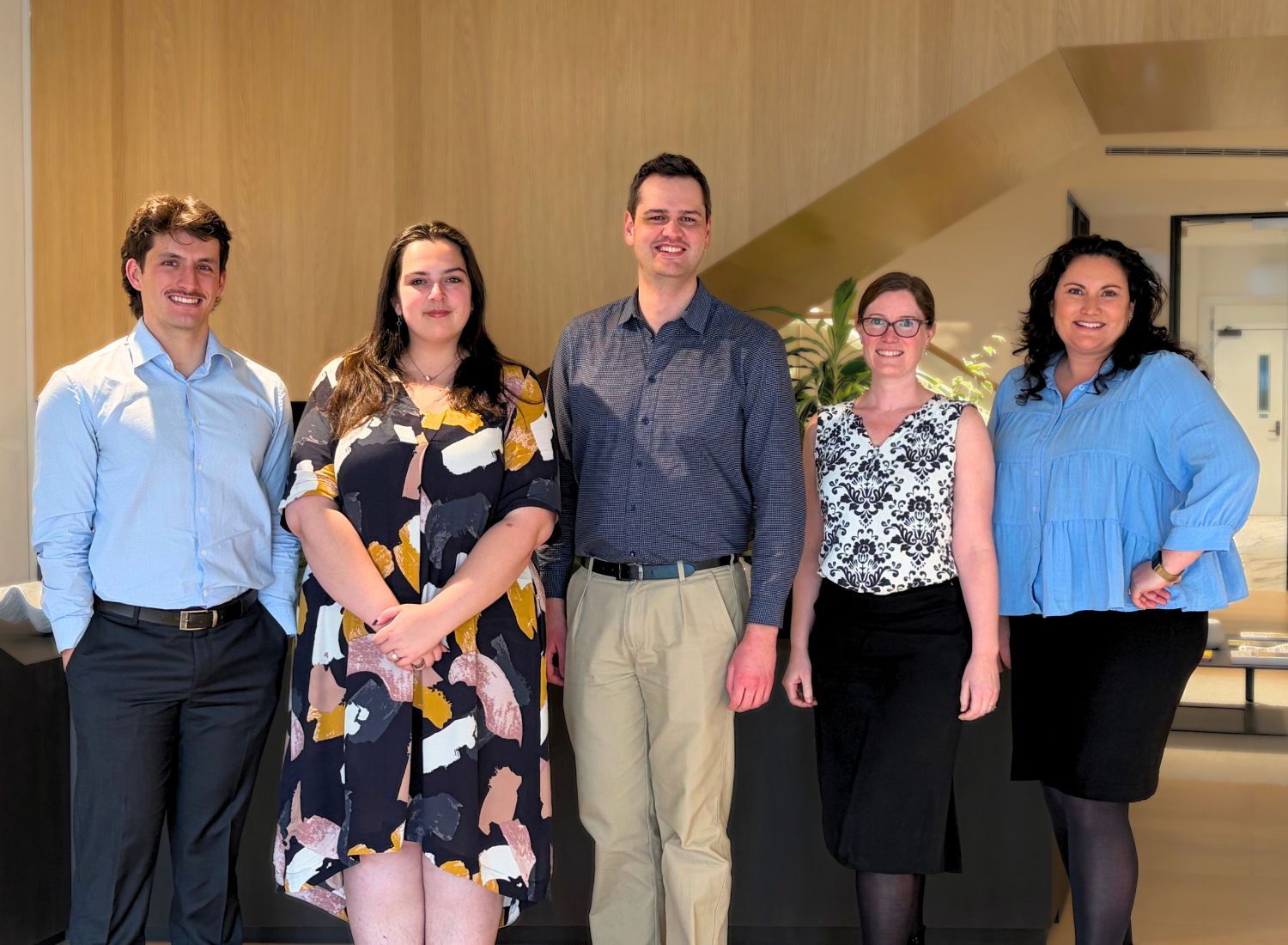
Holland Beckett is pleased to announce the promotion of Cory Lipinski, Lucy Vala-Blackmore, Shannon Eldridge, Anya Sherwan and Jemma Hollis to Associate.
The promotions span the firm’s Environment and Planning, Corporate and Finance, Family Law and Litigation teams, recognising professional achievement, leadership, technical expertise and a commitment to delivering excellent outcomes for clients and communities across the Bay of Plenty.
L-R: Cory Lipinski, Lucy Vala-Blackmore, Shannon Eldridge, Anya Sherwen, Jemma Hollis
Cory Lipinski
Associate – Environment and Planning
Cory is an environment and resource management specialist with expertise across planning, local government and environmental matters.
After completing an LLB and BA at Victoria University of Wellington, Cory began his legal career in Auckland before returning to Tauranga and joining Holland Beckett\'s Environment and Planning team.
He advises a wide range of clients, from private individuals seeking resource consents to organisations undertaking major infrastructure and nationally significant projects. Cory has acted as lead counsel in Council and Department of Conservation hearings and as junior counsel in the High Court.
Known for his technical expertise and strategic judgement, Cory translates complex planning and regulatory issues into practical advice that helps clients achieve their objectives.
Lucy Vala-Blackmore
Associate – Family Law
Lucy Vala-Blackmore is a specialist family lawyer based in Holland Beckett’s Rotorua office.
A Rotorua local, Lucy completed her LLB at the University of Waikato before returning home and joining Holland Beckett as a Summer Clerk in 2019. Since then, she has progressed through the firm from graduate to senior solicitor and now associate.
Lucy has developed extensive experience across all areas of family law and regularly appears in the Family Court. She is known for her calm, solution-focused approach to complex family, relationship property, and trust disputes.
Lucy is a Lead Provider for family legal aid, serves on the Executive Committee of the New Zealand Law Society Family Law Section, and is a Board Member of Te Wāhi Whakaora Rotorua and District Women\'s Refuge. She has played an important role in the growth of Holland Beckett\'s family law practice in Rotorua and contributes to both the legal profession and the Rotorua community through her governance and voluntary roles.
Shannon Eldridge
Associate – Civil Litigation and Dispute Resolution
Dr Shannon Eldridge (Whakatōhea) is a litigator recognised for his technical excellence, analytical approach and strong advocacy skills.
Shannon joined Holland Beckett\'s Litigation and Dispute Resolution team in Rotorua in late 2024, bringing experience across a diverse range of legal matters. Shannon advises on a broad range of civil disputes as well as criminal, employment and administrative law matters.
His practice is supported by a strong academic background, including degrees in Law and Psychology, a Master\'s degree with First Class Honours in Criminology, and a PhD in Law from the University of Auckland.
Shannon serves on the Rotorua District Licensing Committee and volunteers his time and expertise with Citizens Advice Bureau. Outside of work, he is also involved in local theatre productions.
Anya Sherwen
Associate – Corporate and Finance
Anya Sherwen joined Holland Beckett’s Corporate and Finance team in 2024, bringing commercial experience developed across New Zealand and Switzerland.
After graduating from the University of Otago with honours degrees in French and Law, Anya began her legal career in Wellington with a focus on commercial law. She then spent several years in French-speaking Switzerland, where she completed a bilingual Master of Laws specialising in Business and Tax Law, and International and European Law, before returning to her hometown of Tauranga with her family.
Anya is highly regarded for her commercial acumen, collaborative approach and the strategic advice she provides to clients across a broad range of corporate and commercial matters. She works closely on the team’s international aviation practice, advising on financing, acquisitions and sales, leasing and lease restructuring.
Jemma Hollis
Associate – Environment and Planning
Jemma combines specialist legal expertise with more than a decade of planning and policy experience, giving her a unique perspective on resource management matters.
Her experience spans resource management and planning, public works acquisitions, local government processes, enforcement, and emerging legislative reforms. She has appeared as counsel in the District Court, Environment Court, High Court, and Supreme Court of New Zealand. She has also acted on complex consenting, planning, judicial review, heritage, conservation, and coastal matters.
Between 2021 and 2024, she worked at a Tauranga-based law firm, providing advice and representation in mediations, hearings, and court proceedings. Before entering legal practice, Jemma spent a decade in planning and policy roles with local and regional authorities in Tauranga and Auckland. During that time, she specialised in notified applications and appeals, regularly providing expert planning evidence at hearings and in the Environment Court.
Her combined legal and planning background enables her to deliver strategic advice on complex resource management issues.

September is Wills Month
A Will is perhaps the most important document you can leave behind to support your loved ones. Why do you need a Will, what happens if you pass without a Will, and how best should you prepare your Will for your circumstances?
September is Wills Month.
Holland Beckett offers a free Simple Will, or a 20% discount on a Complex Will, if you leave a gift to charity in your Will in September.
Download our Wills Month information pack.
Speak to the Holland Beckett Succession and Estates team about Wills Month and what charity giving options would best suit you.
Contact the team on estates@hobec.co.nz or call our offices on 07 578 2199.
Get started with our online Will Questionnaire.